


What is the spiritual significance of the Ramcharitmanas in Hinduism?
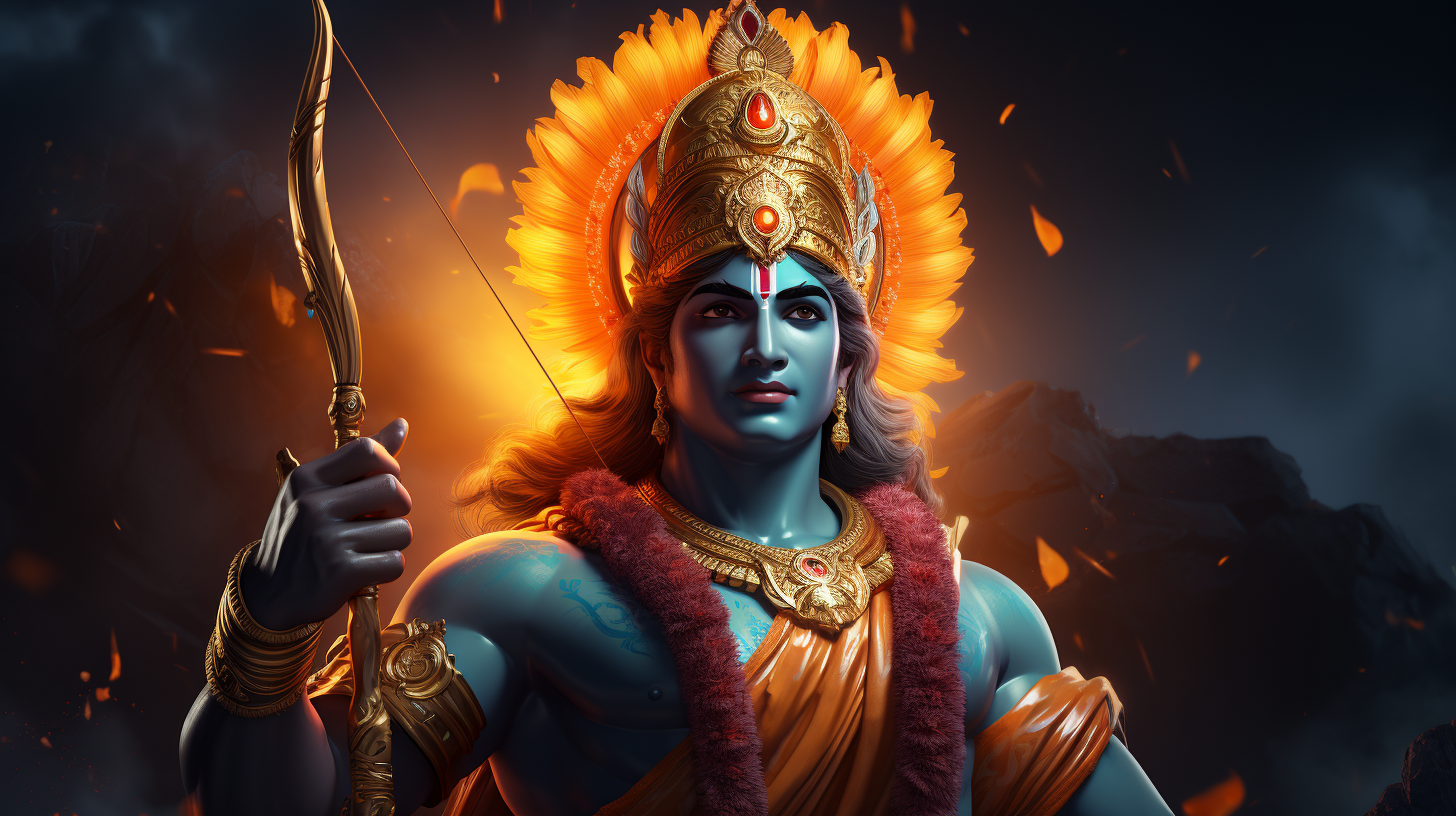
Ramcharitmanas is a holy scripture in Hinduism. The book bears a deeper spiritual significance, depicting the virtuous life of Lord Ramchandra. In Hinduism, it is an important source of devotion, spiritual significance, cultural identity, and moral guidance. The life and lessons of Lord Shri Ram showcases the virtuous life led through prioritising duty, righteousness, and compassion. This living scripture, written by Saint Tulsidas in the 16th century, holds a very special place in the hearts of millions of Hindus. Shri Ramcharitmanas Akhand Path is believed to bring peace, harmony, success, and prosperity in all aspects of life.
Many people get confused between Ramcharitmanas and Ramayana, believing both are the same. However, essentially, they are two completely different holy scriptures written by two different individuals. Both of these scriptures hold an evident place in Hinduism. Today, we will discuss the importance of Ramcharitmanas along with a deeper view and spiritual significance of this poem in Hinduism. We will also explore who was Sant Tulsidas and the difference between Ramcharitmanas (also known as Tulsidas’s Ramayana) and Valmiki’s Ramayana. Although Tulsidas’s Ramayana is significantly followed in North India, there is no doubt that it always has a special position in Hinduism and the heart of every Hindu.
Difference between Ramayana and Ramcharitmanas

In Hinduism, both Ramayana and Ramcharitmanas hold a special place and are often considered the same. However, when you take a deeper look, you will eventually understand they are both different. So, if you want to understand the essence and importance of Ramcharitmanas in Hinduism, you should understand the difference between the Valmiki Ramayana vs Ramcharitmanas. While both Ramcharitmanas and Ramayana depict the life and lessons of Shri Ramchandra, Ramayana is the original epic poem by Sage Valmiki, and Ramcharitmanas, by Tulsidas, is a retelling of Valmiki’s Ramayana.
Ramayana by Sage Valmiki was originally written in Sanskrit and has 24,000 verses and five different parts. Also, there are 7,000 versions of the Ramayana around the world. In India, there are 3 primary versions of Valmiki’s Ramayan: Western Indian, Southern Indian, and Eastern Indian. Among these three versions, the Southern Indian version is considered the most ancient and authentic of all three versions.
On the other hand, Ramcharitmanas by Tulsidas was written in the 16th century in the Awadhi language. It is a regional retelling of the original Ramayana that is slowly becoming popular among Hindus due to its simplified and translucent version of Ramayana by allowing more people to understand and adhere to the core values of lord Ramchandra’s life-teachings.
Who wrote Ramcharitmanas?: About Tulsidas
This sacred text is a retelling of the Sanskrit Ramayana. The manuscript of the text suggests that it was written by Rambola Dubey, also known as Goswami Tulsidas. He was a Hindu saint, belonging to the Vaishnava sect. He wrote many sacred texts in Sanskrit, Braj Bhasha, and Awadhi. His two popular works are Shree Hanuman Chalisa and the Ramcharitmanas. This famous poet spent a large part of his life in the city of Benaras. The Tulsi Ghat in Varanasi, Ganges, is named after the renowned Hindu saint-poet. He also established the revered Sankat Mochan Hanuman temple in Varanasi. Known for his creative genius, Tulsidas was the one who started the Ramlila plays. Ramlila plays are adaptations of the sacred Hindu text Ramayana, written by the renowned Sage Valmiki. These plays have gained increasing popularity with time and are observed with great reverence and pomp every year during Ram Navami in India.
History and origin of the sacred text
Tulsidas’s Ramayana is also known as the People’s Ramayana, and there is a history behind it. The importance of Ramcharitmanas lies in the fact that it made the sacred text of the Sanskrit Ramayana accessible to the common people. It helped to spread the religious teachings of Valmiki’s Ramayana among the common folk residing in the countryside of India. Tulsidas’s decision to rewrite the original Hindu epic in the Awadhi language was itself revolutionary in his contemporary time.
The religious text was written in 1574 CE during the rule of Mughal Emperor Akbar. It was a time of cultural and socio-political turmoil in northern India. People believe that Goswami Tulsidas started writing this religious epic poem on the occasion of Ram Navami, or the day when Lord Rama was born. It is also said that Tulsidas began the composition of this holy text in Ayodhya, the birthplace of Lord Rama. Most of the narrative of this epic poem also takes place in Ayodhya.
However, the text was not written in one place. Tulsidas wrote his epic poem in various pilgrimage sites that are associated with his venerated deity. It is said that Tulsidas has taken the task of writing the holy text in Varanasi. Some portions of the text were also written in Chitrakoot.
Many scholars rejected the merit of Tulsidas’s undertaking as it was written in the Awadhi language. But he was confident about its purpose and never wavered from his goal. Later, the text became a widely popular part of the pantheon of Hindu religious literature. Today, the text is widely embraced and revered as an authoritative text in Hindu culture and faith.
Legends about the origin of the religious book

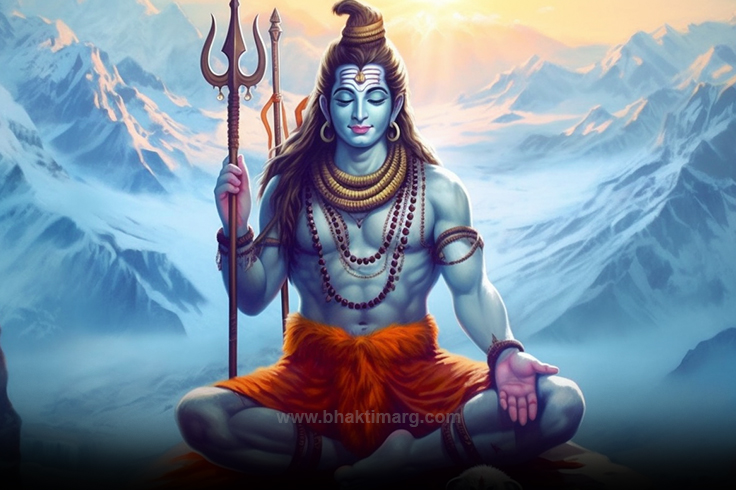
There are various legends and stories around the origin of Tulsidas’s Ramayana. These legends enhance the religious feel of the text. The first legend about the origin of Shri Ram Charit Manas says that the famous poet drew the inspiration for the holy text from the hymn of Lord Shiva, which depicts Shiva describing the story of Rama to his wife Parvati.
Another legend goes that Tulsidas gathered the knowledge about the divine figure of Rama from his Guru Naraharidas. It is believed that he received this knowledge from his Guru during his childhood.
Yet other stories claim that Tulsidas had the ability to see past and future events. This mystic ability allowed him to see the events of Lord Rama’s life in the Treta Yuga.
Another famous legend about this religious epic poem says that Shri Ram Charit Manas was kept in the innermost part of the Vishwanath Temple in Varanasi after its presentation among the scholars of the city. Therefore, the text was approved and guarded by lord Shiva himself, emphasising the authority and importance of Ramcharitmanas in the Hindu religion.
Language and structure of the holy book

Ramayana by Tulsidas was written in the Awadhi language. The language choice of the saint-cum-poet is believed to have democratised the Sanskrit epic about the Hindu lord Rama. The Awadhi language broke the spiritual barrier caused by the limited use of the Sanskrit language and allowed the common man to learn about their religious scriptures.
The writing style of the text is primarily poetic in nature. The effortless incorporation of the concepts of devotion, literature, and philosophy makes Tulsidas’s translation of the original text clear.
Tulsidas also combined the Chaupai meter with dohas in some places in the text. This style helped to maintain a natural flow of the rhythm as well as a sense of meditativeness. There are a total of 7 Kandas or cantos in the epic, following the original Ramayana by sage Valmiki. Each of the Kand in Tulsidas’s Ramayana is an invocation to lord Rama. A prominent feature of Shri Ramcharitmanas lies in a sense of bhakti or devotion that the text promotes. The seven Kandas of the holy text depict the various stages of Lord Rama’s life. The seven Kandas are:
- Balakanda- Depicts the birth, childhood, as well as the marriage of Shri Ram Chandra.
- Ayodhyakanda- Describes the events that led to Rama’s exile from Ayodhya to the forest.
- Araṇyakaṇḍa- Shows Rama’s life with (Sita) his wife and (Laxmana) his brother in the forest. It also depicts the abduction of Sita by the king of Lanka, Ravana.
- Kiskindhakanda- In this kand, Rama makes an alliance with the monkey King Sugriva to search for Sita.
- Sundarkanda- Describes Hanuman’s journey to Lanka to visit Sita as a messenger of lord Rama.
- Lankakanda- It highlights the great battle of Ramayana between Lord Rama and Ravana and the ultimate defeat of Ravana.
- Uttarakanda- This is the final section of the religious epic, which shows the triumph of lord Rama and his return to Ayodhya to the throne.
Plot and characters of the Hindu Scripture

Tulsidas’s Ramayana, based on Valmiki’s original text, has many important characters, most of whom are worshipped by the Hindus. The characters of this religious epic poem by Tulsidas can be divided into groups, such as the Primary characters and other important characters.
Main characters of Tulsidas’s Ramayana:
- Lord Rama (the Avatar of Vishnu)
- Sita (the wife of lord Rama)
- Laxmana (the brother of lord Rama, who revered him deeply)
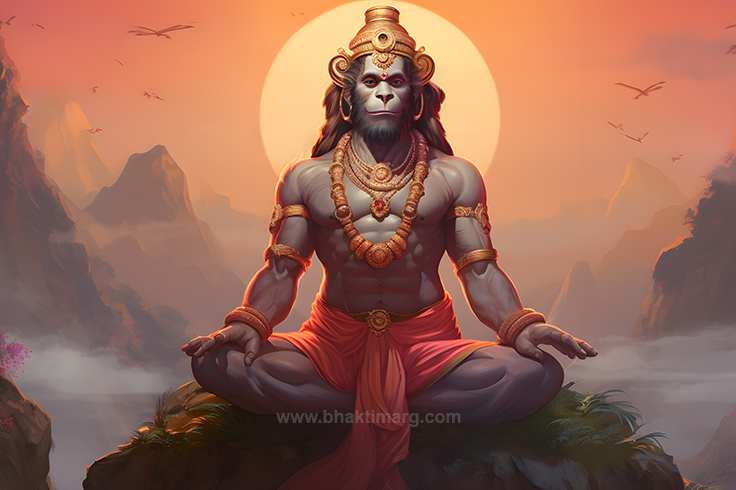
- Hanuman (Hanuman’s Role in the Ramayana is significant. He is called the primary devotee of lord Rama)
- Ravana (the powerful and oppressive Asura king of Lanka who abducts Sita to become the primary adversary of lord Rama)
Other important characters:
Other important characters of the epic are either allies of lord Rama or antagonists. The allies of lord Rama are:
- Dasaratha (the king of Ayodhya and the father of Rama)
- Kaushalya (the chief queen of King Dasaratha and the mother of Lord Rama)
- Bharat (the brother of Lord Rama)
- Sugriva (the monkey King who assisted Rama in his search for Sita)
- Jatayu (a mythical bird who tried to save Sita from Ravana)
- Nala and Nila (the architects of the bridge to Lanka)
- Lava and Kusha (the sons of lord Rama)
- Vibhishana (the brother of Ravana who supported Lord Rama)
- Jambavan (the bear King who helped lord Rama)
- Mandodari (the wife of Ravana, who condemned her husband’s misdeeds)
Antagonists in the epic poem:
- Kaikeyi (the stepmother of lord Rama, who plotted his exile to make her son, Bharat, the king of Ayodhya)
- Manthara (the companion of Queen Kaikeyi who asks her to demand the exile of Rama)
- Surpanakha (the sister of the Asura king Ravana and the demon princess of Lanka who proposed Rama and later Laxmana for marriage)
- Kumbhakarna (the brother of Ravana and the strongest Asura who fought on Ravana’s side in the great battle of Ramayana.
- Meghnad (the son of Ravana, a warrior who defeated the king gods, Indra. He also fought on Ravana’s side)
Themes and learnings from the epic poem

Ramcharitmanas is an epic poem by Sant Tulsidas and one of the most sacred scriptures in Hinduism. The poem tells about the virtuous life of lord Ramchandra and his teachings. The key themes and learning of this revered scripture involve the victory of good over evil, the importance of devotion and duty, and the significance of ethical living in righteous conduct in life. Thus, the importance of Ramcharitmanas in Hinduism is beyond explanation. Here are some key themes and learnings we got from this epic:
- Victory of good and evil
The primary theme of Shri Ram Charit Manas is the victory of good over evil. It is a clear portrait of the conflict between lord Rama (the righteous side) and Ravana (The devil or the evil). It also teaches about the importance of taking the right path to defeat any kind of injustice.
- Importance of Dharma or duty
Another key theme of Ramcharitmanas is the importance of Dharma or duty in one’s life. The poem tells us about the unwavering commitment of Lord Rama towards his duty as a son, king, and husband. It also highlighted the importance of fulfilling one’s commitments or responsibilities with integrity and devotion.
- Role of bhakti
The role of Bhakti is also an important theme of Ramcharitmanas. The unhinged devotion of Hanuman towards Lord Rama, as well as Lord Rama’s devotion towards his Dharma, shows us the importance of devotion in one’s life. It is also the central narrative of this epic poem, teaching us the true power of devotion and guiding people on the right path of bhakti.
- Patience and Self-control
Patience is also a crucial learning from this epic poem by Sant Tulsidas. It showcases the importance of patience and self-control in the tough times. Lord Ramchandra’s calm and collected aura, as well as his exceptional ability to make wise decisions even in times of crisis, teaches us to remain calm and practice self-control during challenging hours, which can be beneficial than making decisions in a rush.
- Significance of family
The epic poem by Sant Tulsidas also brings us a crucial learning about the significance of family. It highlights various aspects and relationships within the family. This holy scripture also shows the significance of family and the importance of practicing love, duty, and respect within the family.
- Result of negative influences
Not to forget, Ramcharitmanas also teaches us about the consequences of negative influence. The epic poem elaborates on the evil influence of Manthara on Kaikeyi. As a result, it also offers a crucial learning of the importance of guarding oneself from the negative influencers in life.
- Compassion and forgiveness
The poem also teaches us the virtue of forgiveness and compassion through elaborating Lord Ramchandra’s willingness to forgive and even extend help to even his enemies in challenging circumstances.
- Value of experience-driven learning
This epic poem also explains the value of experiential learning in life. It depicts how Lord Ramchandra learns from his life experiences and implements his learning in his future decisions.
- Importance of social equality and harmony
Lastly, the epic poem subtly elaborates the importance of social equality and harmony in establishing a strong community by depicting how Lord Ramchandra joins hands with different classes of people in his life journey and creates a harmonious relationship with them.
Spiritual significance of Ramcharitmanas

Tulsidas’s Ramcharitmanas and Ram Raksha Stotra are significant parts of the Hindu religious beliefs and culture. The spiritual importance of Ramcharitmanas is also undeniable. Tulsidas carefully translates not only the story of Ramayana from the Sanskrit text by Valmiki, but also infuses a sense of bhakti into the text with the invocation of the divine figure of Lord Rama and his Leelas. The text is prominent for teaching moral values that Lord Rama practised in his own life. It shows the importance of following the ideals set by Lord Rama for a spiritually enriched life.
Also, it is believed that reciting the Ramayana can enhance spiritual growth and clear karmic debts. Reading Tulsidas’s translation of the original Ramayana offers similar benefits.
Conclusion
Ramcharitmanas holds a significant position in Hinduism, inspiring people to live a dutiful, devoted, and righteous life. This epic poem is a retelling of the original Ramayana, which has a strong spiritual significance in Hinduism. Here, Sant Tulsidas has beautifully elaborated the dutiful, righteous, devoted life of Lord Ramchandra and his key learning for his followers (Hindus). It is one of the most popular Ram Navami festival stories, even nowadays, still connecting us with the virtues of a righteous, devoted, and dutiful life. Here, we have tried to have a deeper look at the spiritual significance of Ramcharitmanas in Hinduism, along with highlighting some essential aspects like key themes and learnings, important characters, history, origin, Valmiki Ramayana vs Ramcharitmanas, and importance in contemporary life.