


Tirumala Venkateswara Temple, Tirupati
High on the Tirumala Hills in Andhra Pradesh, at an elevation of about 853 metres, stands what is widely considered the most visited pilgrimage site on earth. The Tirumala Venkateswara Temple, known just as often as Tirupati Balaji Temple, is dedicated to Lord Venkateswara, a form of Vishnu believed to have appeared on earth specifically to protect humanity through the trials of Kali Yuga. That belief is so central to the temple’s identity that the place itself is called Kaliyuga Vaikuntha, meaning heaven on earth for this age, and the deity is worshipped as Kaliyuga Prathyaksha Daivam, the living god of the present era. Millions of pilgrims make the climb every year, and on any given day the temple sees crowds that would be considered festival-level turnout almost anywhere else.
How the Temple Came Into Being
The temple’s origins reach back further than most written records can pin down precisely, with some accounts placing early construction as far back as 300 AD, though its documented history becomes clearer from around the 9th century onward. The earliest recorded endowment came from a Pallava queen named Samavai in 966 CE, marking the start of a long chain of royal patronage that would shape the temple over the next several centuries. According to tradition, it was first established by a Tamil king named Tondaiman, and from there it passed through the hands of dynasty after dynasty, each adding to its wealth, structure, and stature.
The Pallavas of Kanchipuram, the Cholas of Tanjore, the Pandyas of Madurai, and later the Vijayanagara kings all took turns expanding and enriching the temple. Of these, the Vijayanagara emperor Krishnadevaraya stands out for his exceptional generosity toward Tirumala; statues of him and his queens still stand within the temple premises today as a lasting record of that devotion. Alongside royal patrons, the temple’s spiritual development owes a great deal to the philosopher-saint Ramanujacharya, who visited Tirumala three times across his life. On his first visit he studied the esoteric meaning of the Ramayana under his uncle. On his second, he helped settle a doctrinal dispute over the nature of the temple’s presiding deity. On his third, arriving at the remarkable age of 102, he installed the image of Govindaraja and laid the foundations of what would become the town of Tirupati itself.
Today the temple is administered by the Tirumala Tirupati Devasthanams (TTD), a trust overseen by the Andhra Pradesh government, which manages everything from daily rituals to the enormous logistics of hosting pilgrim crowds that regularly run into the hundreds of thousands on a single day.
Architectural Essence
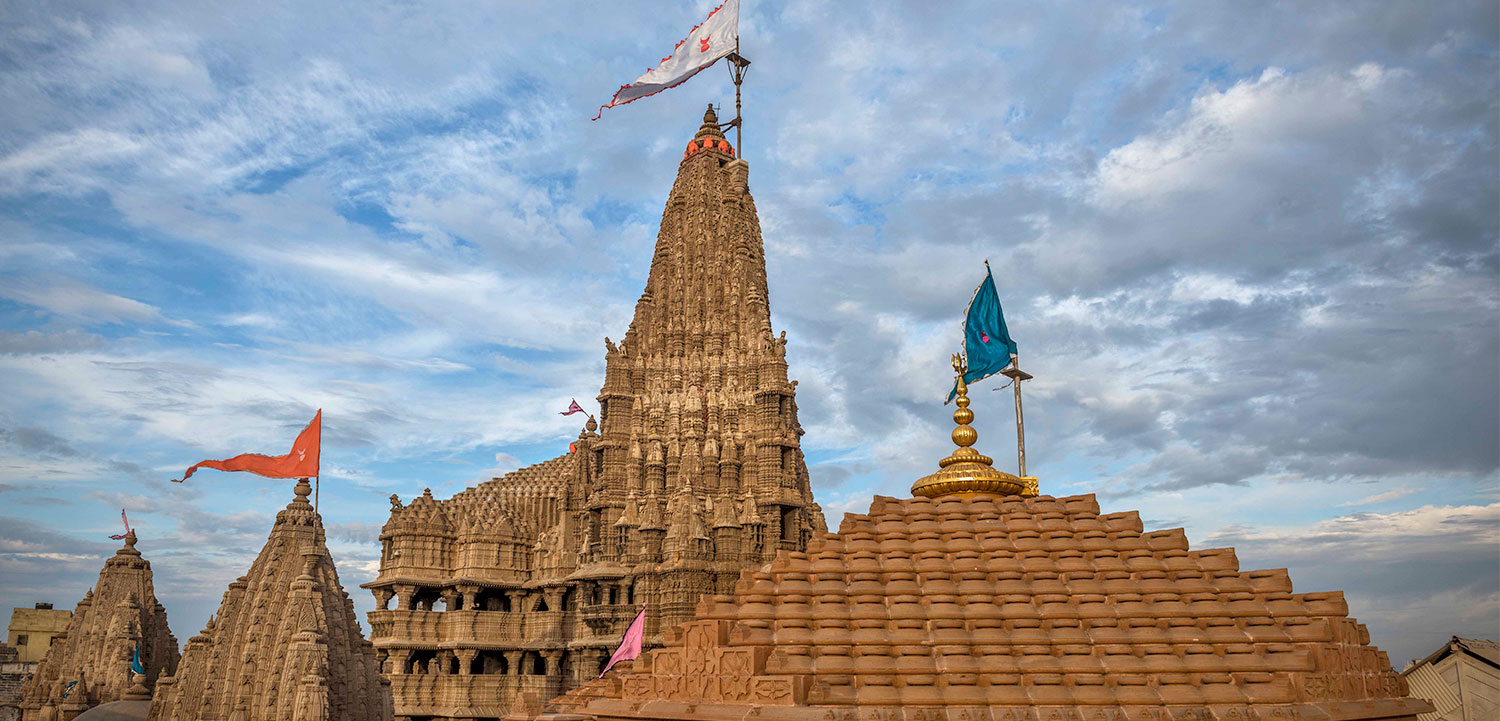
The temple is built in the Dravidian architectural style, and its layout unfolds through a series of courtyards and gateways rather than a single straightforward approach. A three-storeyed gopuram carrying seven kalasams (ornamental finials) was added over the main entrance during the 12th and 13th centuries, and remains one of the temple’s most recognizable features. Passing through the outer courtyards leads pilgrims along the Vimana Pradakshinam, the circular path that winds around the Ananda Nilayam, the golden-roofed sanctum that houses the main deity.
Inside this innermost sanctum stands a two-metre black stone idol of Venkateswara in a standing posture, facing east, flanked by his consorts Bhudevi and Sridevi. The idol wears a diamond-studded crown considered to be among the most valuable single ornaments in the world. Along the pradakshina path, smaller shrines dedicated to Varadaraja Swamy and Yoga Narasimha Swamy sit tucked into the route, along with functional spaces that reveal just how self-contained the temple complex is: a main kitchen known as the Potu, a sacred well called Bangaru Bavi, and dedicated halls for ritual preparations. The temple sits on the southern bank of the Swami Pushkarini, a holy tank considered essential to the site’s sanctity, and the surrounding Tirumala Hills, comprising seven peaks representing the seven hoods of Adisesha, have earned the temple its popular epithet, the Temple of Seven Hills.
Why It Matters
- It’s one of the eight self-manifested (Swayambhu) Vishnu shrines in India and is listed as the 106th and final of the earthly Divya Desams, the sacred Vishnu temples celebrated by the Tamil Alvar saints.
- It’s widely regarded as the richest temple in the world by daily donations, a reflection of the sheer scale of devotion it draws, funding TTD’s extensive charitable, educational, and healthcare initiatives across the region.
- The nine-day Sri Venkateswara Brahmotsavam, held every year around September or October, is the temple’s single biggest event, drawing enormous crowds for its processions, chariot festivals, and elaborate rituals.
- The tradition of hair tonsure, where devotees offer their hair as a mark of surrender and gratitude, has become one of the temple’s most recognizable devotional customs, supported by dedicated tonsure halls on site.
- Along with sister shrines like Govindaraja Temple in Tirupati town below, it anchors one of the most significant Vaishnavite pilgrimage networks in South India.
Good to Know Before You Go
- The queue is the real journey. Depending on the season and day, general darshan wait times can range from a couple of hours to well over twelve; TTD’s Sarva Darshan is free, while paid options like Special Entry Darshan (around Rs. 300) offer a faster route for those short on time.
- Book ahead where you can. TTD releases darshan tokens and accommodation slots online in advance, and doing this before you travel saves significant time and uncertainty once you arrive.
- Dress code is enforced. Traditional Indian attire is expected inside the temple; men are generally expected to avoid shorts and sleeveless tops, and it’s worth checking TTD’s current guidelines before you go, since enforcement has tightened over the years.
- The hair tonsure tradition is optional but iconic. If you choose to participate, dedicated halls near the temple handle this, and TTD provides basic facilities for pilgrims afterward.
- Prasadam matters here. The temple’s laddu prasadam is famous in its own right, made under strict traditional recipes at the Potu (temple kitchen), and is one of the few temple prasadams in India with a Geographical Indication (GI) tag.
- Plan for the climb or the queue for transport. Pilgrims can walk up via the traditional footpaths from Tirupati town, a route many undertake as an act of devotion, or take one of the frequent buses that run up the hill; private vehicles need permits during peak season.
- Best time to visit is generally September to March, when the weather is cooler and more comfortable for the walk and the wait; Brahmotsavam season is spectacular but also the most crowded time of year by far.
Darshan Timing & Festival
Open Close Timing : |
Temple opens around 3:00 AM and remains active until about 1:30 AM the next day; general (Sarva) Darshan typically runs until around 1:00 AM, with specific windows for Suprabhatam, various sevas, and special darshans throughout the day |
Festivals : |
Sri Venkateswara Brahmotsavam (September/October), Vaikunta Ekadasi, Teppotsavam (float festival), Rathasapthami |
Temple Information
Basic Services : |
Sarva Darshan, Special Entry Darshan, Prasadam (laddu), Annaprasadam (free meals), Tonsure halls, Pilgrim accommodation, Cloakroom facilities |
Organized By : |
Tirumala Tirupati Devasthanams (TTD), Andhra Pradesh Government |
Dedicated To : |
Lord Venkateswara (Vishnu) |
Architecture : |
Dravidian style, construction and expansion spanning centuries from roughly 300 AD onward |
Photography : |
Not permitted inside the temple complex |
Entry Fee : |
Free (Sarva Darshan); paid options like Special Entry Darshan available |
How to Reach
Address : |
Sri Venkateswara Swamy Temple, Tirumala, Tirupati district, Andhra Pradesh 517504 |
Roads : |
Well connected by state and private buses from Tirupati town to Tirumala; private vehicles require permits during peak periods |
Nearest Railway : |
Tirupati Railway Station, about 22 km from Tirumala, with extensive connections across India |
Nearest Airport : |
Tirupati Airport, roughly 25 to 30 km away, with regular domestic flights from major Indian cities |
Website : |
https://www.tirumala.org/ |