

Maa Kushmanda Mantra Lyrics in English
ऊँ देवी कूष्माण्डायै नमः॥
Om Devi Kushmandayai Namah
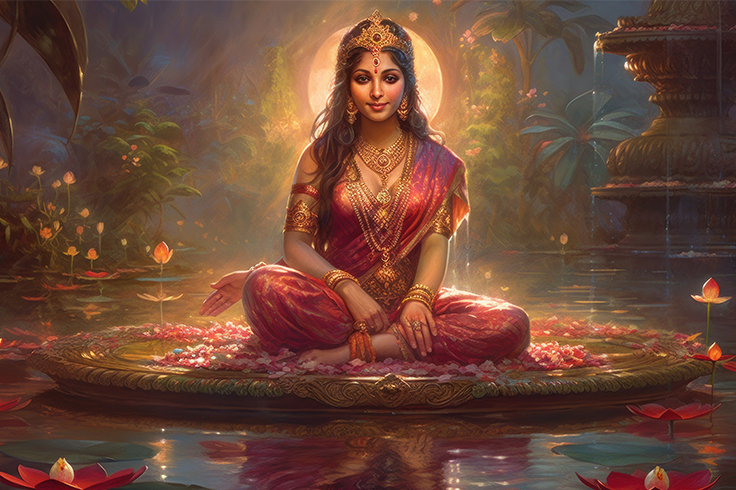
The sacred Kushmanda mantra is devoted to Maa Kushmanda, the fourth form of Goddess Durga. She is believed to have created the universe with her divine smile and radiant energy. Devotees chant this mantra to seek her blessings for health, prosperity, positivity and inner strength.
In Navratri 2026, Maa Kushmanda is worshipped on Wednesday, 14 October (Chaturthi). For the full schedule and muhurat, see our Navratri 2026: Dates, Timings & Significance guide.
Word-by-Word Meaning
- Om (ॐ): The universal sound, symbolising the divine energy that sustains creation.
- Devi (देवी): The Goddess, source of feminine power and divinity.
- Kushmandayai (कूष्माण्डायै): To Maa Kushmanda, the cosmic mother who created the universe with her divine smile. The name is explained as “Ku” (little), “Ushma” (warmth or energy) and “Anda” (cosmic egg).
- Namah (नमः): A humble salutation: “I bow down with devotion.”
Complete meaning: “I bow down to Goddess Kushmanda, the radiant creator of the universe.”
Significance of the Kushmanda Mantra
The Kushmanda mantra is connected with creation, vitality and abundance. She is known as Adiswarupini, the original form who gave birth to the universe, and is depicted riding a lion with eight arms, holding a kamandal, bow, arrow, lotus, nectar pot, discus, mace and a japa mala.
- She is believed to bless devotees with health, energy and prosperity.
- Her worship is associated with the Anahata Chakra (heart chakra), nurturing love and compassion.
- Her mantra is chanted to dispel worry and negativity.
- On the spiritual path, she awakens creativity and vitality.
Navratri 2026 – Day 4 Colour and Date
- Date: 14 October 2026 (Wednesday)
- Day: Navratri Day 4 (Chaturthi), dedicated to Maa Kushmanda
- Colour of the Day: Royal Blue
Why Royal Blue?
Royal blue reflects depth, calm and stability, and is associated with prosperity and balanced confidence. Devotees wear it while offering prayers to invite her blessings of peace and positivity.
Navratri colours are a regional custom that follows the weekday and changes every year, so traditions vary. Some devotees wear orange on this day, which stands for warmth, energy and vibrancy, and reflects her power to create life with her smile. You are free to follow your family or community tradition. To see all nine colours, read Navratri 2026: The 9 Colours of Navratri & Their Significance.
Benefits of Chanting the Kushmanda Mantra
Devotees believe that chanting this mantra with sincerity:
- Health and vitality: Invites a sense of energy and well-being.
- Prosperity and abundance: Attracts positivity and opportunities.
- Courage and confidence: Empowers you to face challenges with strength.
- Mental peace: Brings calmness and emotional balance.
- Spiritual growth: Connects you to the cosmic energy of creation.
(Chanting is a spiritual practice and not a substitute for medical care.)
Vidhi (How to Chant the Mantra)
- Purification: Bathe and wear clean clothes before chanting.
- Altar setup: Place an idol or picture of Maa Kushmanda, and light a diya (lamp) and incense.
- Offerings: Offer red flowers, fruits, and especially pumpkin (kushmanda), which is dear to the Goddess. Malpua is also a popular offering.
- Mala japa: Use a rudraksha or crystal mala for chanting.
- Number of chants: 108 times is ideal, but beginners can start with 11 or 21.
- Mindset: Chant with devotion, focusing on the radiant smile from which the universe is said to have emerged.
Conclusion
The Kushmanda mantra is a prayer of creation, positivity and strength. By chanting Om Devi Kushmandayai Namah, you invite the blessings of the cosmic mother who nurtures life itself. Whether you seek health, prosperity or peace, her worship can fill your day with light and vitality.