


Shree Jagannatha Temple, Puri
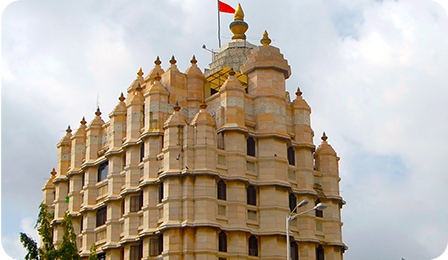
On the Bay of Bengal coast in Odisha, the skyline of Puri is dominated by a single stone tower topped with a wheel and a fluttering flag. This is the Shree Jagannath Temple, known locally as Srimandir, one of the four Char Dham pilgrimage sites and home to Lord Jagannath, a form of Vishnu worshipped alongside his elder brother Balabhadra and sister Subhadra. Unlike nearly every other major Hindu temple, the deities here aren’t polished stone or metal. They’re painted wooden figures with large round eyes and unfinished-looking limbs, and that unusual form sits at the center of the temple’s most beloved legends. Add the world-famous Rath Yatra chariot festival and a kitchen said to feed tens of thousands daily, and you have a temple unlike any other in India.
The Legend Behind the Deities
The story of how Jagannath came to be worshipped in this form is one of the most retold in Odisha. According to tradition, King Indradyumna was told in a dream to find a sacred blue form of Vishnu, known as Nila Madhava, worshipped in secret by a tribal chieftain. When the deity vanished before the king could reach it, a divine voice instructed him to build a temple and wait for a sacred log, Daru Brahma, to wash ashore. The god Vishwakarma, the divine architect, appeared as an old craftsman and agreed to carve the idols on one condition: that he be left completely alone until the work was done.
Days passed in silence. Unable to wait, the queen persuaded the king to open the door, and Vishwakarma vanished, leaving three unfinished figures with no hands or feet. Devotees see this not as an incomplete work but as the very form the divine chose, and the deities have been worshipped that way ever since. Every 12 to 19 years, in a ritual called Nabakalebara, the wooden idols are replaced with new ones carved from specially identified neem trees, a secretive and elaborate ceremony that draws enormous crowds.
How the Temple Came Into Being
The temple standing today was begun in the 12th century by Anantavarman Chodaganga Deva, a ruler of the Eastern Ganga dynasty who also left his mark across Odisha’s sacred landscape, and was completed by his successor Ananga Bhima Deva. Over the centuries it survived repeated invasions and attacks and was preserved, restored, and defended by successive local rulers and devotees, the details of which are better documented through historical sources than through any single account. It has continued as a living, continuously worshipped institution, today administered by the Shree Jagannath Temple Administration (SJTA).
Architectural Essence
The temple is a masterwork of Kalinga architecture, built in the Rekha Deula style, with a soaring curvilinear tower rising to roughly 214 feet, making it one of the tallest temples in Odisha. The complex is enclosed by a 20-foot-high outer wall called Meghanada Pacheri, with four gates facing the four directions: the Lion Gate (Singhadwara) at the east, and the Horse, Tiger, and Elephant gates in the other directions. Pilgrims entering through the main gate climb the 22 sacred steps, the Baisi Pahacha, each of which is considered holy.
Crowning the main tower is the Neelachakra, a sacred wheel visible from many parts of Puri, along with a flag that is changed every day in a centuries-old ritual performed by a priest who climbs the tower without safety equipment. The surrounding precinct holds dozens of smaller shrines and halls, including the temple’s legendary kitchen and the Anand Bazar where its sacred food is distributed.
Mahaprasad: The Food of the Gods
The temple’s kitchen, often described as one of the largest in the world, cooks Mahaprasad in earthen pots stacked on wood fires, following a process unchanged for centuries. Devotees believe that food offered here becomes divine and is considered pure regardless of who it is shared with, which is why people of all backgrounds sit and eat it together at Anand Bazar within the temple complex. For many pilgrims, tasting Mahaprasad is as essential to a Puri visit as the darshan itself.
Why It Matters
- It’s one of the four sacred Char Dham sites, along with Badrinath, Dwarka, and Rameswaram, considered essential stops on a complete Hindu pilgrimage.
- The Rath Yatra, held every year around June or July, sees the three deities pulled through Puri on enormous wooden chariots by millions of devotees, and has inspired Rath Yatra celebrations in cities across India and around the world.
- It’s among the few major Hindu shrines where the principal deities are carved from wood and renewed in a cycle, rather than being permanent stone or metal images.
- The tradition of Mahaprasad has made the temple a rare space where social boundaries around food are deliberately set aside, central to Odisha’s cultural identity.
A Note on Entry Rules
Entry into the temple has traditionally been restricted to Hindus, and this is strictly enforced by temple authorities. Non-Hindu visitors, including foreign tourists, are not permitted inside, though they can view the temple’s exterior from public vantage points nearby, including the rooftop of the Raghunandan Library across the road. The practice is rooted in long-standing temple tradition and has been debated publicly over the years, with supporters citing religious custom and critics raising questions of access. Non-Hindus are, however, welcome to watch and participate in the Rath Yatra procession on the streets. Visitors should confirm current rules with temple authorities before travelling.
Good to Know Before You Go
- Arrive early for shorter queues. The hours between 5:00 and 8:00 AM are generally the calmest for darshan, with crowds building steadily through the day.
- Plan accommodation months ahead for Rath Yatra. Hotels and lodges in Puri fill up very quickly around the festival, and booking several months in advance is common practice.
- Leave your belongings behind. Phones, cameras, leather items, bags, and umbrellas are not allowed inside, so carry as little as possible and use the cloakroom facilities nearby.
- Dress modestly and traditionally. Simple, conservative clothing is expected, and the SJTA has enforced dress guidelines in recent years.
- Try Mahaprasad before you leave. Buying a portion at Anand Bazar is one of the most memorable parts of a visit.
- Pair it with Konark and Chilika. The Sun Temple at Konark and Chilika Lake are both within easy day-trip distance, and many travellers combine all three.
- October to February is the best season for comfortable weather, while June and July are best for the Rath Yatra experience, but also the most crowded.
Darshan Timings & Festivals
Open Close Timing : |
Opens around 5:00 AM, closes late evening, with ritual breaks. Timings shift on festival days, so confirm locally. |
Festivals : |
Rath Yatra, Snana Yatra, Bahuda Yatra, Nabakalebara (every 12 to 19 years), Chandan Yatra |
Temple Information
Basic Services : |
Darshan, Mahaprasad, Cloakroom facilities, Pilgrim accommodation nearby |
Organized By : |
Shree Jagannath Temple Administration (SJTA) |
Dedicated To : |
Lord Jagannath (Vishnu), Balabhadra, and Subhadra |
Architecture : |
Kalinga style (Rekha Deula), 12th century, approx. 214 ft tower |
Photography : |
Not permitted inside the temple complex |
Entry Fee : |
No |
How To Reach
Address : |
Grand Road, Puri, Odisha 752001 |
Road : |
Well connected to Bhubaneswar (about 60 km) by road and bus; autos and cycle-rickshaws run within Puri |
Nearest Railway : |
Puri Railway Station, about 2 to 3 km from the temple, with direct trains from Delhi, Kolkata, and Mumbai |
Nearest Airport : |
Biju Patnaik International Airport, Bhubaneswar, roughly 60 km away |
Website : |
https://www.shreejagannatha.in |