


Shardiya Navratri 2026 – 9 Nights, 9 Inner Practices for a Mindful Festival
Most of us know what Navratri looks like. There’s the kalash on a bed of sprouting barley, the fasting thali, the dhak drums and dandiya sticks, the pandals glowing in red and gold. Fewer of us pause to ask a quieter question: what are these 9 nights actually for?
This Shardiya Navratri, try treating the festival as more than a checklist of rituals. Think of it as a 9-night reset for body, mind and spirit, timed by the changing season itself. If you’re reading this mid-festival, don’t worry about having “missed” the early days. The practices below work from whichever night you begin.
Why Navratri Arrives When It Does
Shardiya Navratri falls in the lunar month of Ashwin, as the monsoon withdraws and the air turns crisp and dry. The name comes from Sharad Ritu, the autumn season. Long before modern wellness vocabulary, Indian traditions recognised this stretch as a delicate hinge in the year.
In Ayurvedic thinking, the junctions between seasons are called ritu sandhi. These are periods when the body is adjusting to new conditions. Heat from the rainy months lingers while the cooler air arrives, digestion can feel unsettled, and seasonal infections tend to spread. Traditional advice for such periods is consistent: eat lighter, keep meals simple and regular, rest well and calm the mind.
Now look at what Navratri asks of devotees. Many people reduce heavy, oily and processed food. Many eat simple, freshly prepared meals. Households wake earlier, light lamps, chant and pause their usual busyness. Whatever your beliefs, it’s striking how well the festival’s rhythm matches what a body in seasonal transition needs. In Indian tradition, the spiritual and the practical were rarely treated as separate.
That’s worth keeping in mind as you plan the 9 days. Navratri isn’t meant to exhaust you. At its best, it leaves you lighter, clearer and steadier than when you began.
The Goddess as Shakti: The Power Within

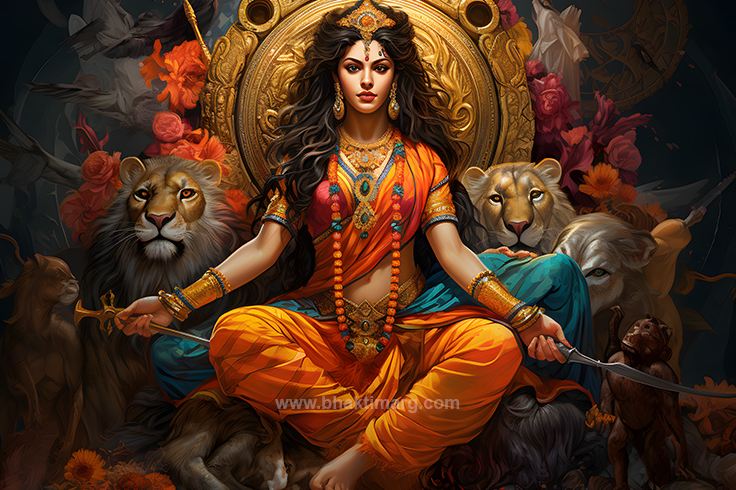
In the stories of Navratri, Durga is the warrior goddess who confronts Mahishasura and the forces of disorder. But the festival’s deeper idea is Shakti, the dynamic energy that powers every act of creation, preservation and transformation.
The Devi Mahatmya, also known as the Durga Saptashati (a text of about 700 verses arranged in thirteen chapters), narrates the goddess’s victories over demonic forces. Many readers see these battles as external stories with an internal echo. The demons represent forces we all wrestle with: arrogance, delusion, restlessness and inertia. The goddess represents the strength that rises to meet them.
Reading Navratri this way changes how we observe it. The festival becomes less about asking for something from outside and more about remembering the power already within us.
The 9 Nights as an Inner Journey

A widely shared way of structuring the 9 nights divides them into three phases of three nights each. Each phase is associated with a goddess (Durga, Lakshmi and Saraswati) and, in many interpretations, with one of the three gunas, the qualities that shape our minds and actions. Traditions differ in the details, but the framework offers a useful map for personal reflection.
Nights 1 to 3: Clearing (Durga and the tamasic layer). The first phase is about confronting what holds us back. In the gunas, tamas stands for inertia, heaviness and dullness. This is the stage to notice your procrastination, your cluttered routines and the grudges you’re carrying. The goddess as Durga is fierce and protective, helping you cut through what no longer serves you.
Nights 4 to 6: Building (Lakshmi and the rajasic layer). Once the ground is cleared, you can plant something. Rajas is the quality of energy, desire and action. Lakshmi here represents not only wealth in the narrow sense but abundance in a wider one: good health, healthy relationships, generosity, gratitude and purposeful work. This phase asks, “What do I want to nurture?”
Nights 7 to 9: Illuminating (Saraswati and the sattvic layer). The final phase turns toward wisdom. Sattva is clarity, balance and peace. Saraswati, the goddess of knowledge and the arts, stands for learning, reflection and inner stillness. By the ninth night, the aim is a calmer, more discerning mind.
You don’t need to be formally religious to benefit from this structure. Think of it as a three-act story for your own 9 days: clear, build, illuminate.
9 Simple Daily Practices
Rituals can feel overwhelming when your schedule is already full. Here’s an alternative that pairs each night with one small, realistic practice. Consistency matters more than intensity.
Night 1: Set an intention. Write one clear sentence about what you want from these 9 days. It might be calm, discipline, healing or simply more presence. Keep it somewhere visible.
Night 2: Create a digital pause. Keep your first and last hour of the day free of screens. Replace scrolling with a short prayer, a stretch or a few quiet breaths.
Night 3: Release. Write down a habit, thought or resentment you’re ready to let go of. Then tear up the page or burn it safely. It’s a small act, but symbolic gestures can help us mark real shifts.
Night 4: Practise gratitude. Note three specific things you’re thankful for, ideally ones you’d normally overlook, such as a meal, a kind message or a quiet morning.
Night 5: Offer seva. Do one act of service without expecting recognition. Feed someone, help a neighbour, support a cause or simply lend your time. Service turns devotion into action.
Night 6: Eat mindfully. Choose one meal today and eat it slowly and in silence, without a phone or television. Notice flavour, texture and fullness. If you’re fasting, this deepens the experience.
Night 7: Learn something nourishing. Read a few pages of a devotional text, a verse from the Saptashati, a biography or any book that lifts your mind.
Night 8: Sit in stillness. Spend ten minutes in quiet. You might chant a mantra, follow your breath or simply sit with your thoughts. If your mind wanders, gently bring it back. That is the practice.
Night 9: Reflect. Return to the intention you wrote on Night 1. What shifted? What do you want to carry forward beyond the festival? Write it down.
A Mindful Approach to Navratri Fasting

Fasting is among the most visible parts of Navratri, and also one of the most varied. Some people eat only once a day, some avoid grains, some take only fruit and milk, and others don’t fast at all. Follow the tradition your family observes, and do what feels right for your health.
If you are fasting, these principles can help:
Stay hydrated. Water, coconut water, buttermilk and lassi keep energy steady. Dehydration is a common reason people feel headachy or drained during fasts.
Build balanced plates. Staples like kuttu (buckwheat), singhara (water chestnut) flour, sama rice, sabudana and makhana are comforting, but they’re mostly carbohydrates. Pair them with protein and healthy fats, such as curd, paneer, nuts, seeds and milk.
Avoid extremes. Long gaps without food followed by heavy, deep-fried meals can leave you bloated and sluggish. Smaller, regular meals and baked or lightly sautéed dishes are gentler on the body.
Go easy on salt and sugar. Many fasting dishes lean heavily on rock salt (sendha namak), packaged snacks or sweets. Mindful moderation keeps you feeling better.
Break your fast gently. After a long gap, start with fruit, a glass of water or something light before a full meal.
Know when to adapt. If you have diabetes, blood pressure concerns, are pregnant or nursing, are elderly, or manage any medical condition, speak with your doctor before fasting. Devotion has never required harming your health, and many traditions explicitly make allowances for people who need them.
The word upavasa, often translated as fasting, literally suggests “dwelling near” the divine. The food matters far less than the quality of attention you bring.
One Festival, Many Voices: Regional Traditions Worth Knowing
Navratri isn’t one celebration. It’s a tapestry of local customs, and learning about a few beyond your own can make the festival feel richer.
Gujarat and Maharashtra. Garba and dandiya turn neighbourhoods into circles of music, rhythm and joy. The circular movement is often described as symbolising the cycle of time and the goddess at the centre.
West Bengal and eastern India. Durga Puja is a grand cultural festival of art, music and community. Artisans craft elaborate idols, pandals become creative showcases, and communities gather for food and festivities. In many Bengali traditions, the moment where Ashtami meets Navami, known as Sandhi Puja, is considered especially powerful. The festival closes on Dashami with the immersion of idols and the joyful Sindoor Khela.
Tamil Nadu, Karnataka, Andhra Pradesh and Kerala. In many South Indian homes, families arrange Golu (also called Bommai Golu or Bommala Koluvu), tiered displays of dolls and figurines depicting gods, scenes from epics and everyday life. Neighbours are invited, songs are sung and small gifts are exchanged. It’s as much about community and storytelling as devotion.
Telangana. Women create Bathukamma, stacked floral arrangements, from seasonal wildflowers. They place them in open spaces and sing and dance around them. It’s a celebration of nature, womanhood and community.
Karnataka. The Mysuru Dasara festivities are famous for their royal heritage, illuminated palace and grand processions.
North India. Ramlila performances narrate the story of Rama across the days leading up to Dussehra, culminating in the burning of Ravana’s effigy. For many families, the stage and the story are the heart of the season.
Himachal Pradesh. Kullu Dussehra begins on Vijayadashami, just as celebrations elsewhere wind down. Local deities are brought together in a vibrant gathering of the valley.
Different styles, same spirit: gratitude, community and the celebration of divine femi9 energy.
Making Navratri Kinder to the Planet
Festivals don’t have to come at nature’s expense. A few conscious choices can make your celebration gentler:
- Choose clay idols. Idols made of natural, unbaked clay and plant-based colours dissolve more safely than those made with plaster of Paris and chemical paints.
- Rethink decoration. Use flowers, leaves, fabric and diyas instead of single-use plastic.
- Handle offerings thoughtfully. Compost flower and leaf offerings, or follow local guidance for responsible disposal, rather than dumping them into rivers and lakes.
- Watch the sound. Celebrate joyfully, but be mindful of neighbours, children, elders and animals when it comes to loudspeakers and late-night timings.
- Share, don’t waste. Distribute prasad and extra fasting meals so that nothing goes to waste.
When we treat the earth as sacred, which Indian traditions have long said it is, protecting it becomes part of the worship.
Closing Thought
The goddess in Navratri is not distant or abstract. She’s the strength you summon on a hard morning, the patience you find when it seems you have none, and the courage to start again. The festival gives us 9 nights to remember that.
Whether you spend these days in elaborate puja, quiet reflection, joyful dance or simple acts of kindness, the invitation is the same: come back to yourself, a little clearer and a little stronger.
Shubh Navratri to you and your family!